
How Biogas Works: From Organic Waste to Clean Energy
Biogas is produced through anaerobic digestion — the breakdown of organic material like animal manure, food scraps, and crop residue by bacteria in an oxygen-free environment. It's a naturally occurring process; a digester simply contains it and captures what it produces.
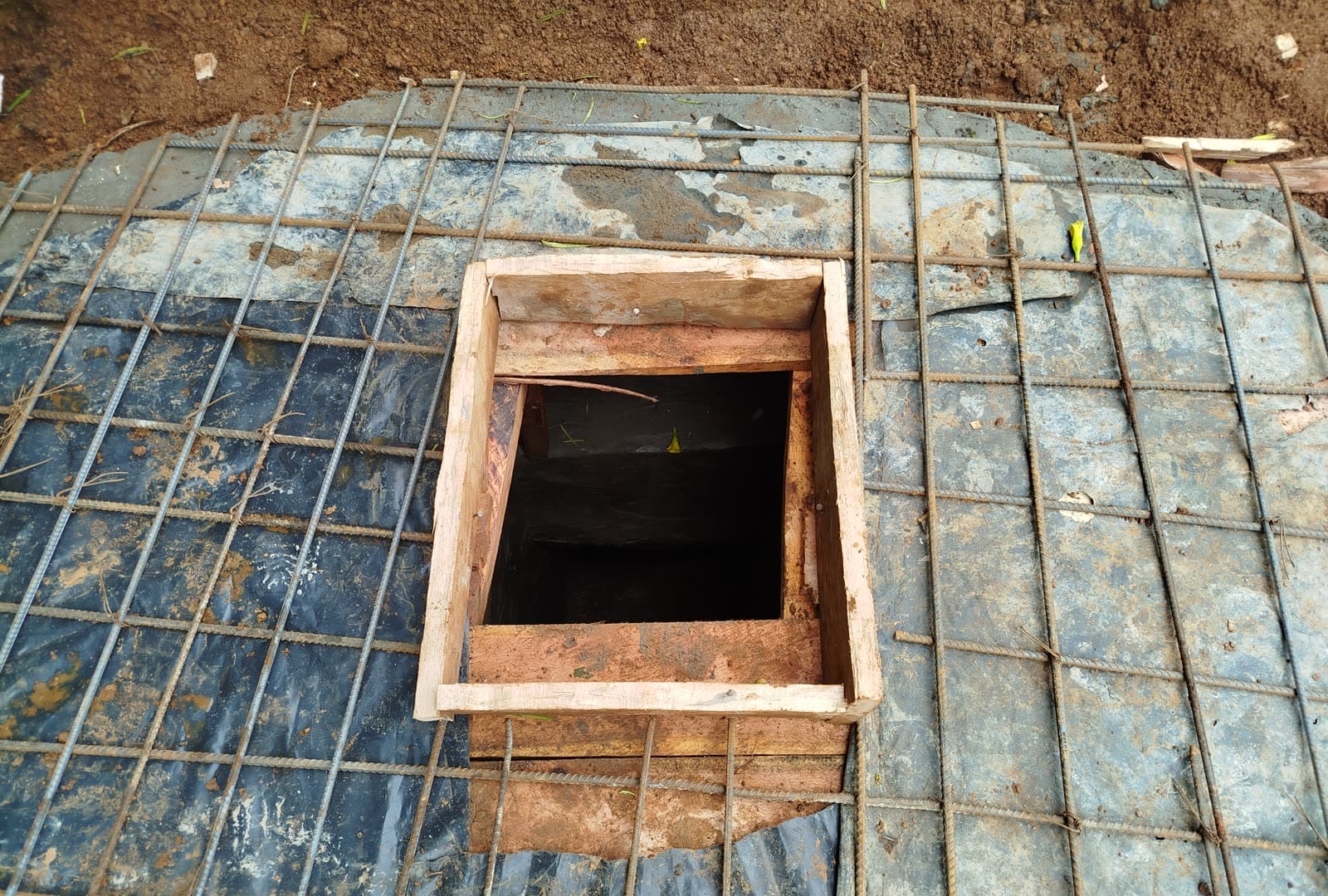
Waste is fed into a sealed underground tank, where naturally occurring microbes break it down over a period of weeks. As they work, they release a mix of gases, mostly methane, which is piped directly to a stove, heater, or lamp for immediate use. No electricity or fuel is needed to run the tank itself — it's a continuous, low-maintenance process once it's up and running.
What's left behind after digestion is bio-slurry, a nutrient-rich material that can go straight onto farmland as fertilizer. In effect, one system produces two useful outputs from a single waste stream: energy for the kitchen and food for the soil.
The basic process is identical whether the digester is a small household unit or a larger farm-scale system. What changes is the size of the tank and the volume of waste it can handle each day, which is why sizing a digester correctly to a household's actual waste output is one of the first things we assess before construction begins.